Bridge House
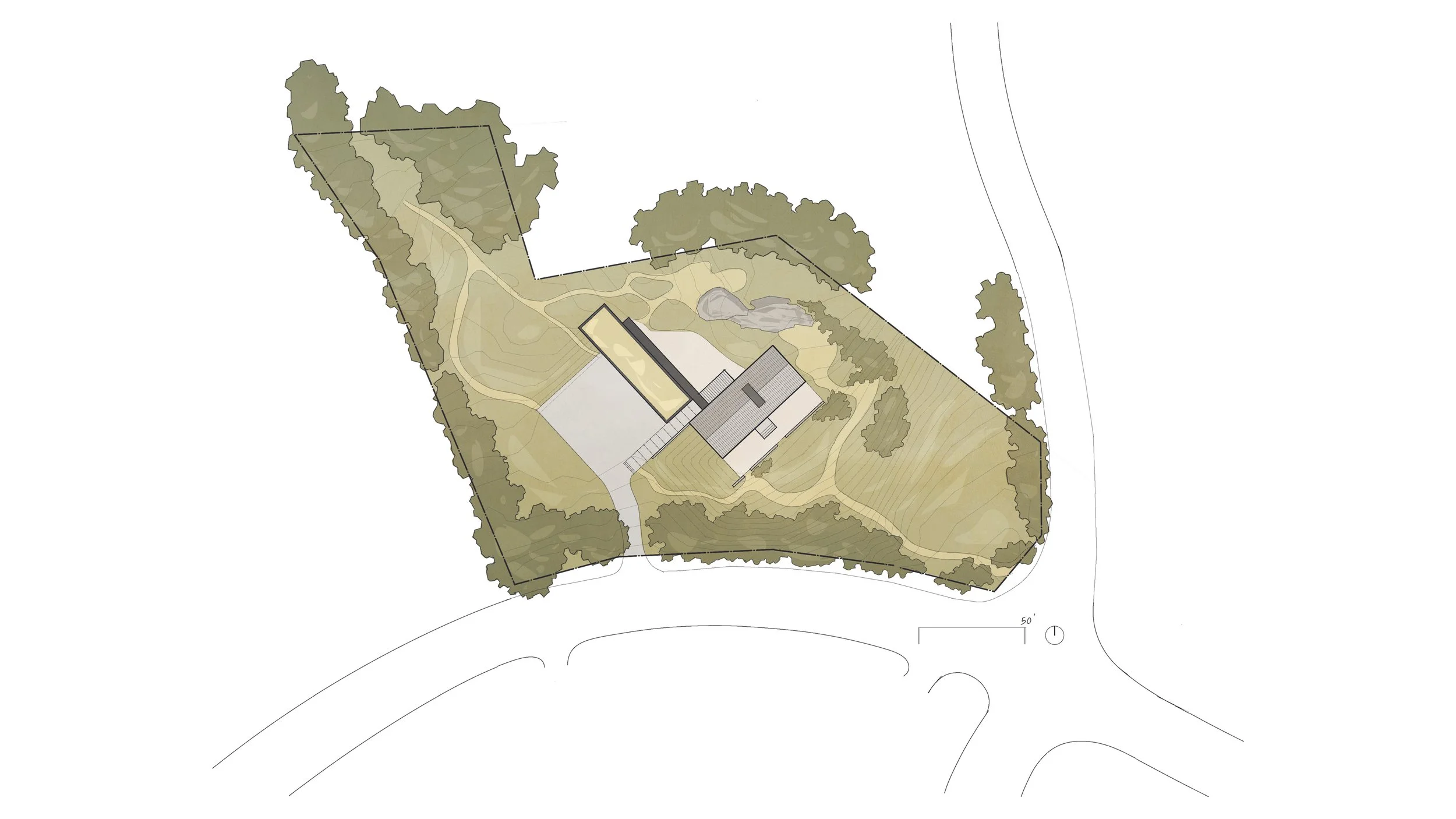
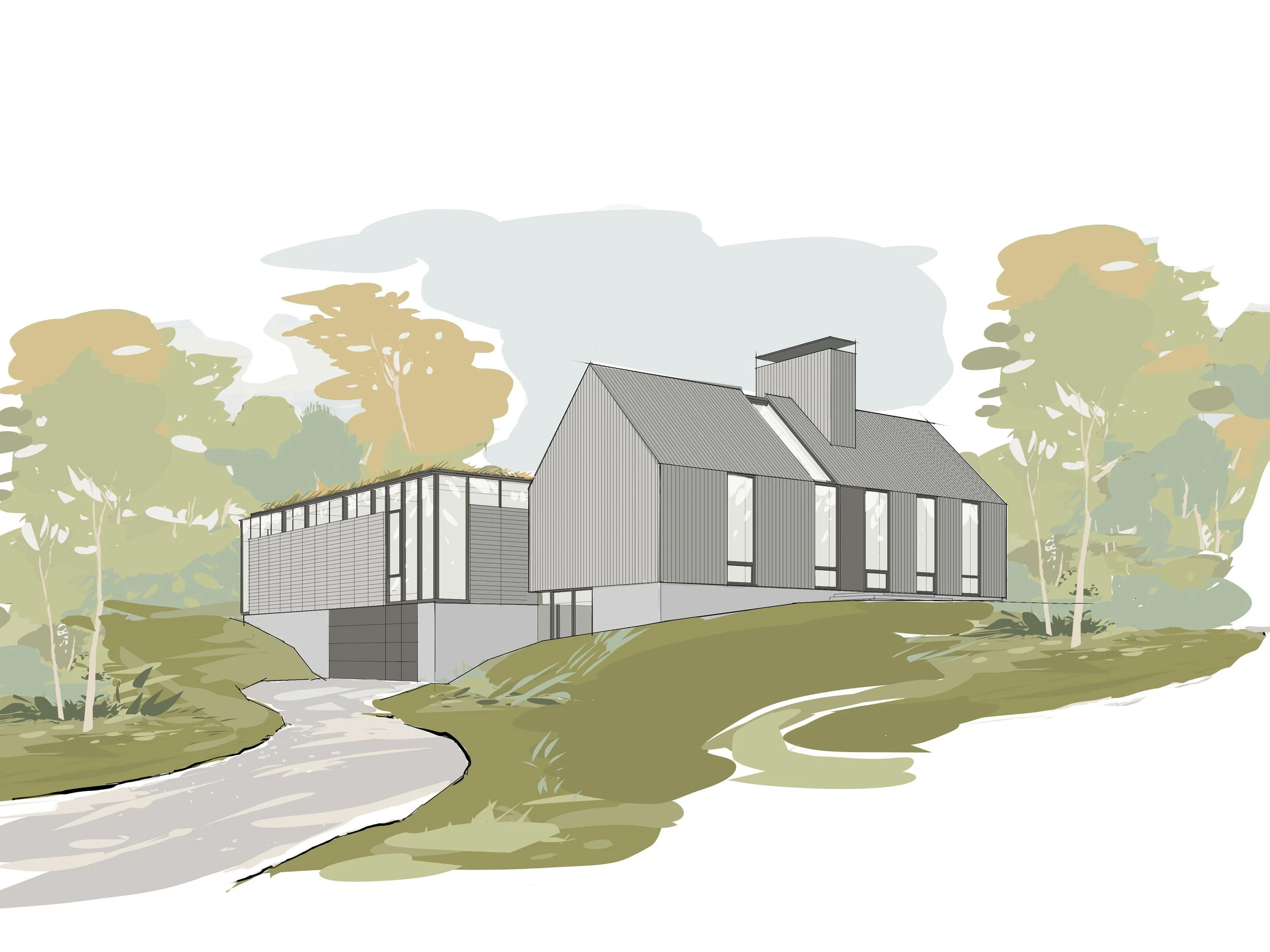
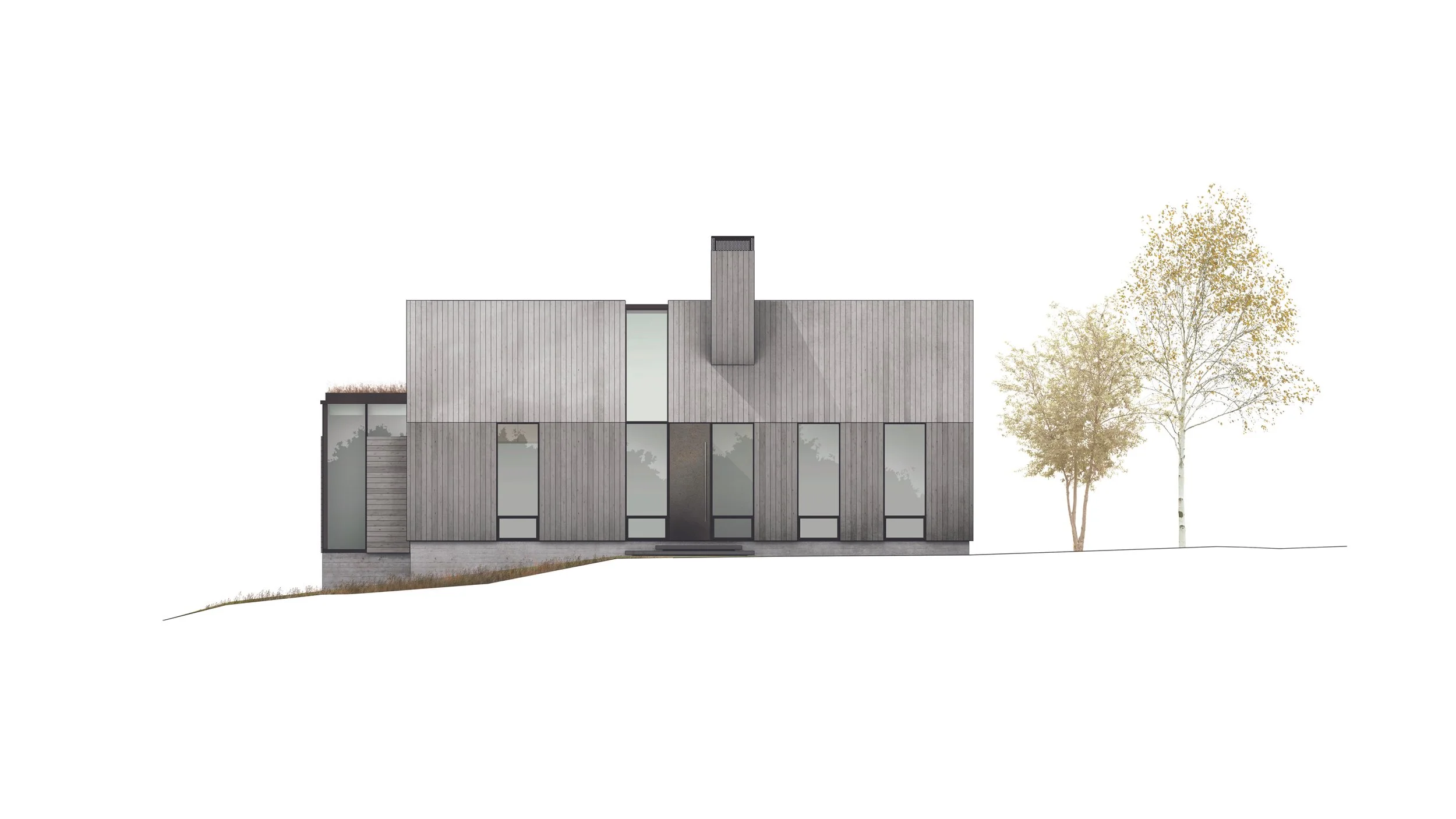
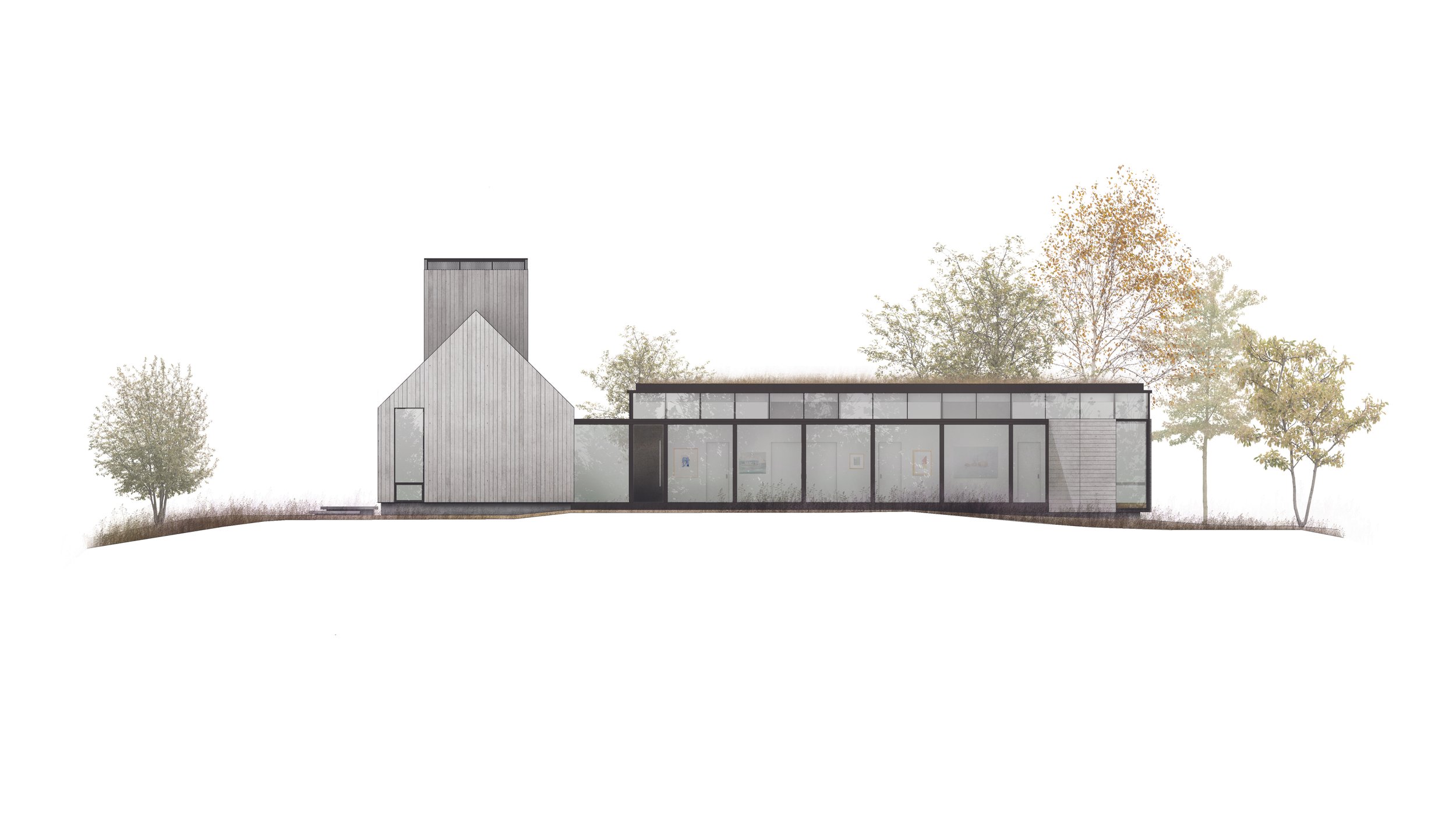
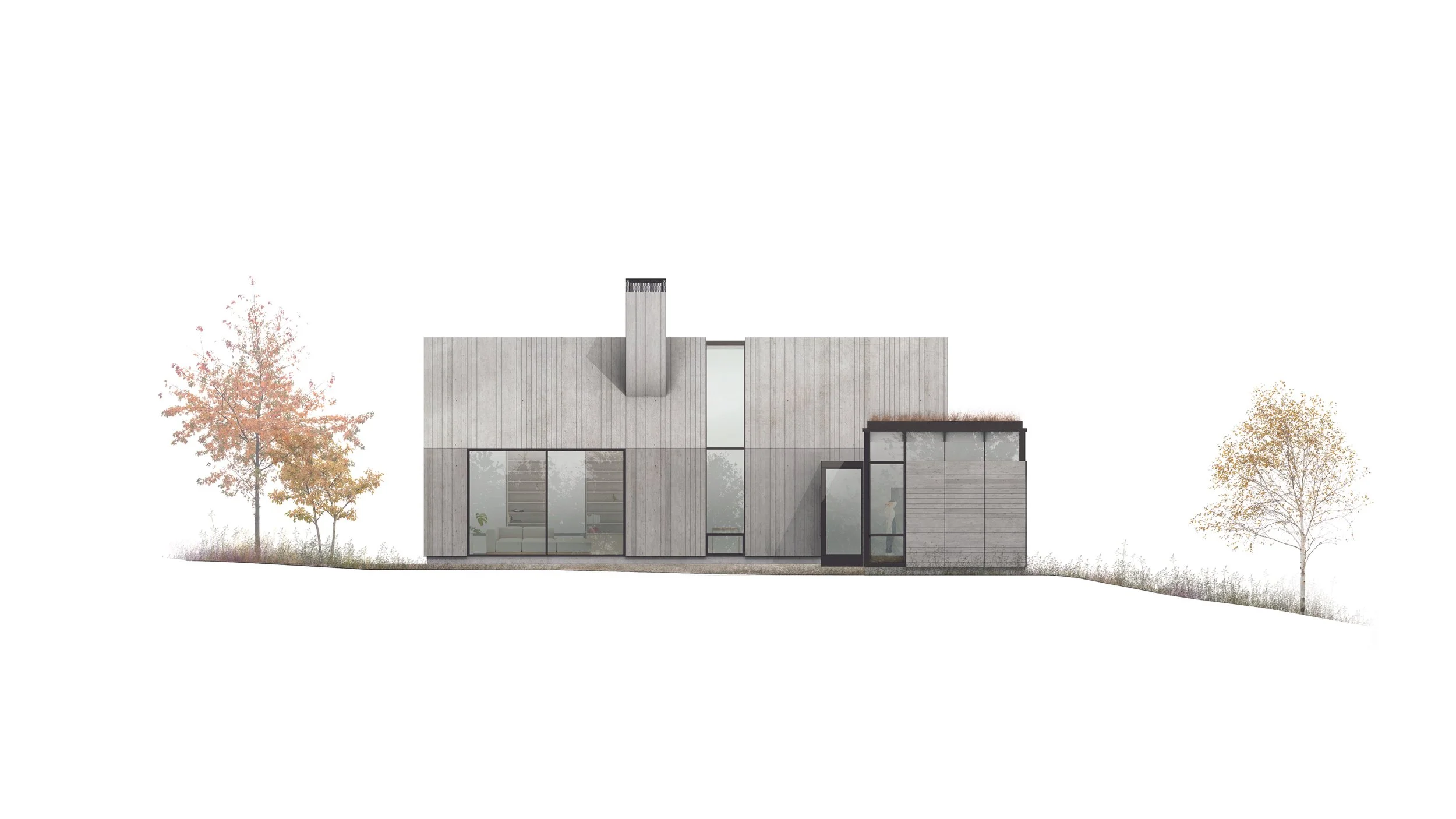
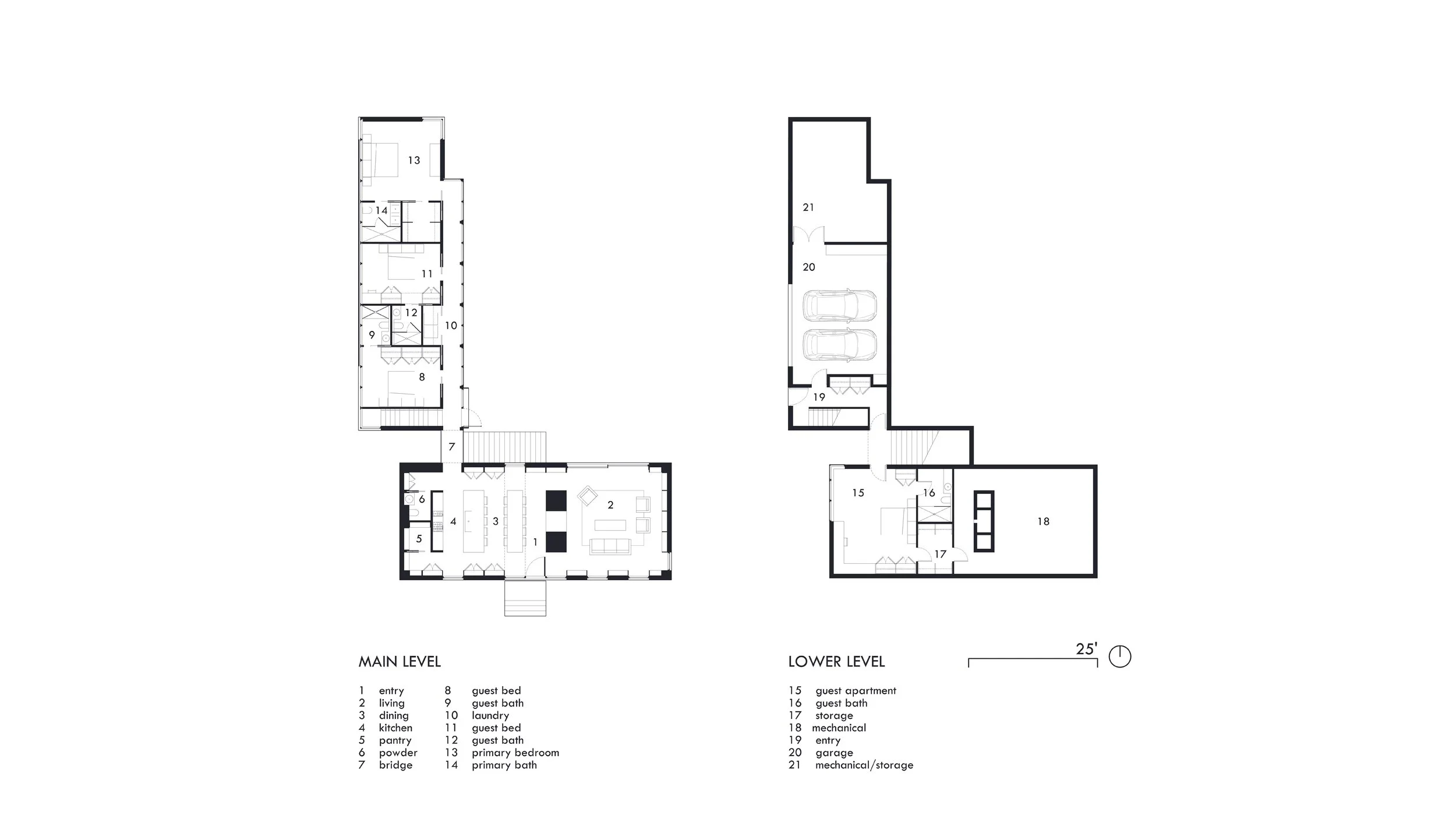
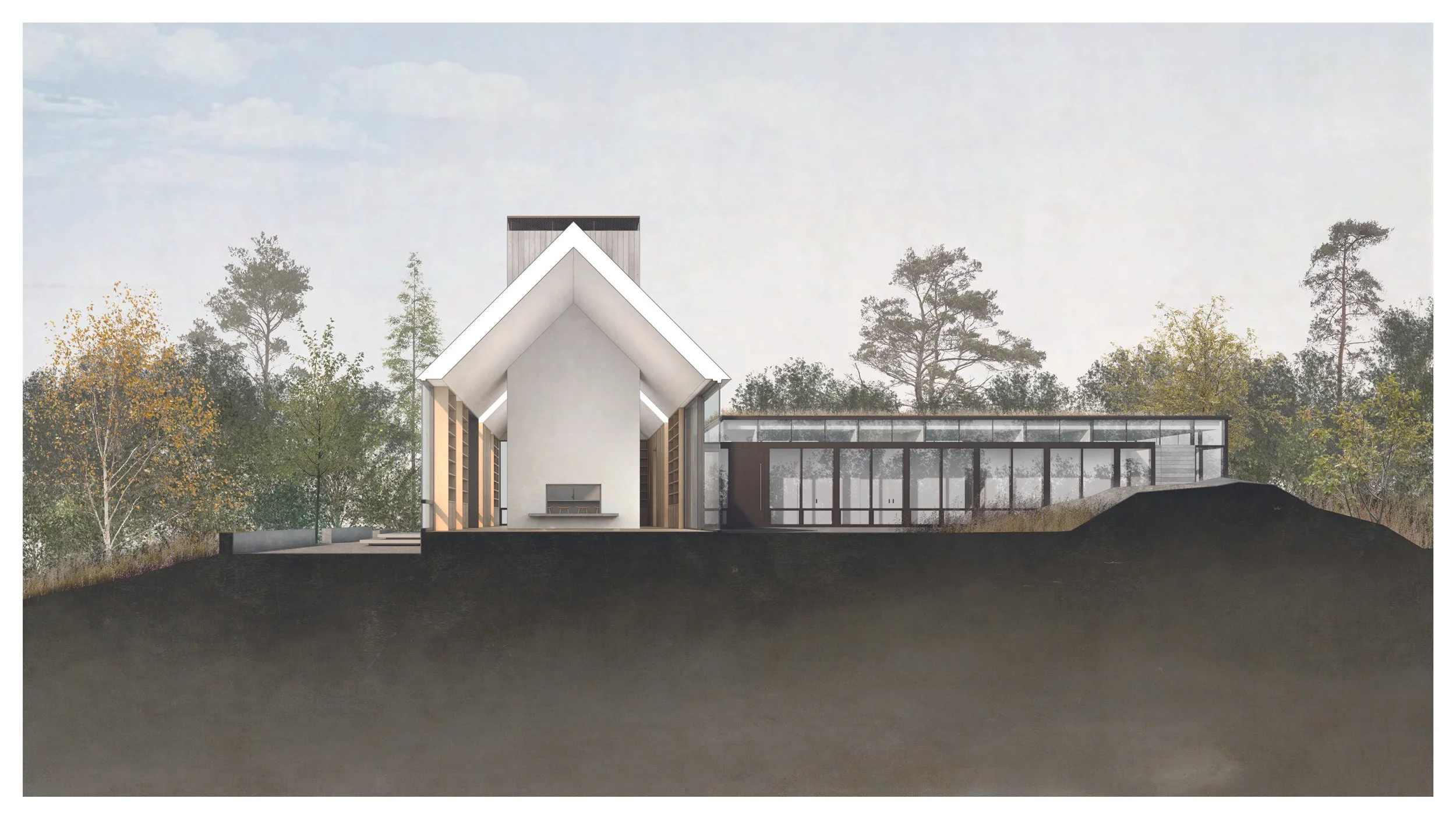
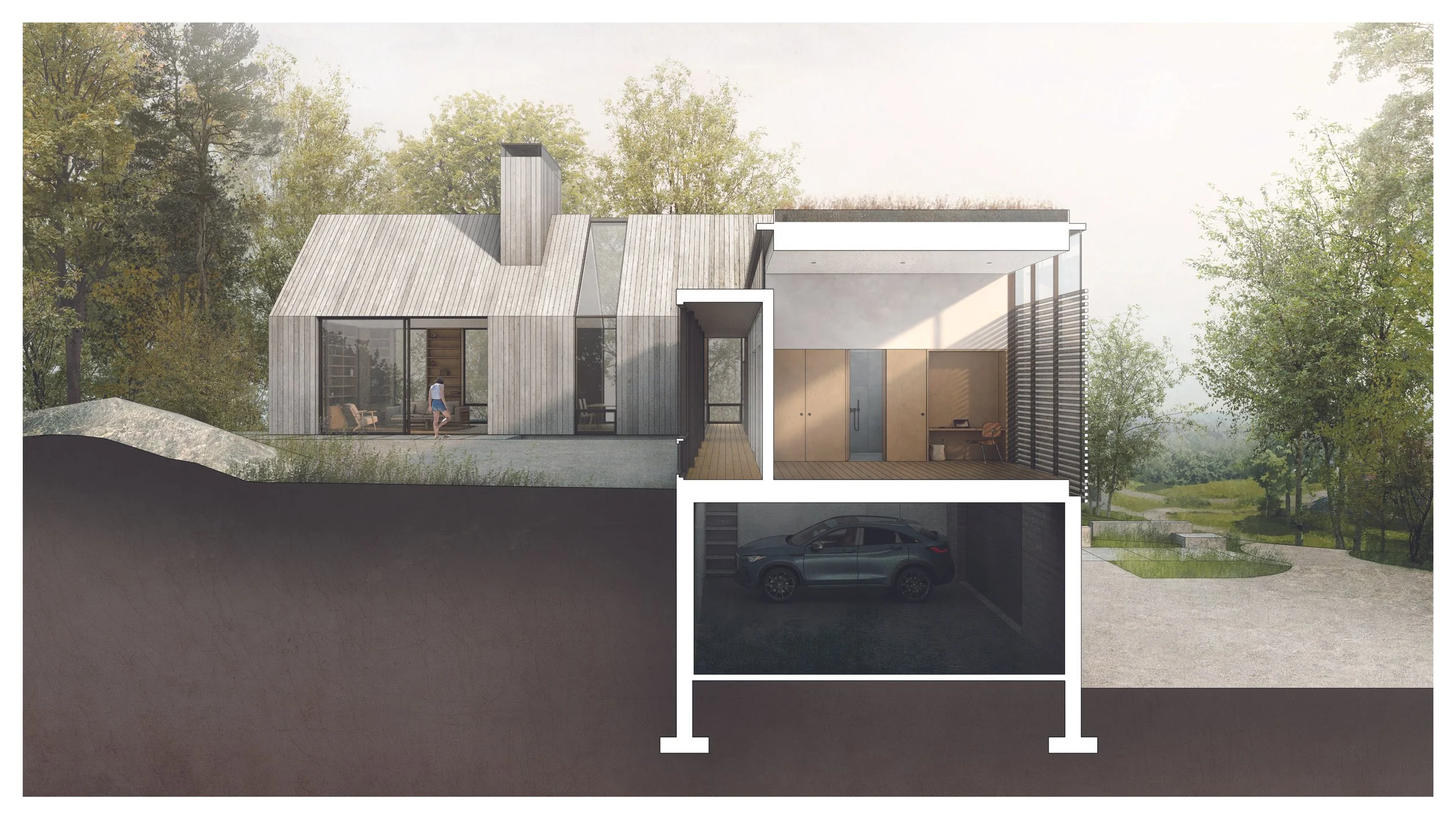
An existing Cape sat on the property for over 150 years. Several additions created cramped spaces in the attempts to adapt a modern program. The new owners sought to rectify these issues with larger open spaces that harnessed daylight and amplified volume. While the memory of the Cape is ingrained in the site, a new gable-roofed structure will take its place, referencing the Cape typology while modernizing it. Larger windows draw in natural light while a wood rainscreen provides a textural change from the clapboards of the original. Inside, the gable form is celebrated, with an open plan devoid of structural interruptions, allowing the public spaces to front the street while simultaneously opening to the site on the north.
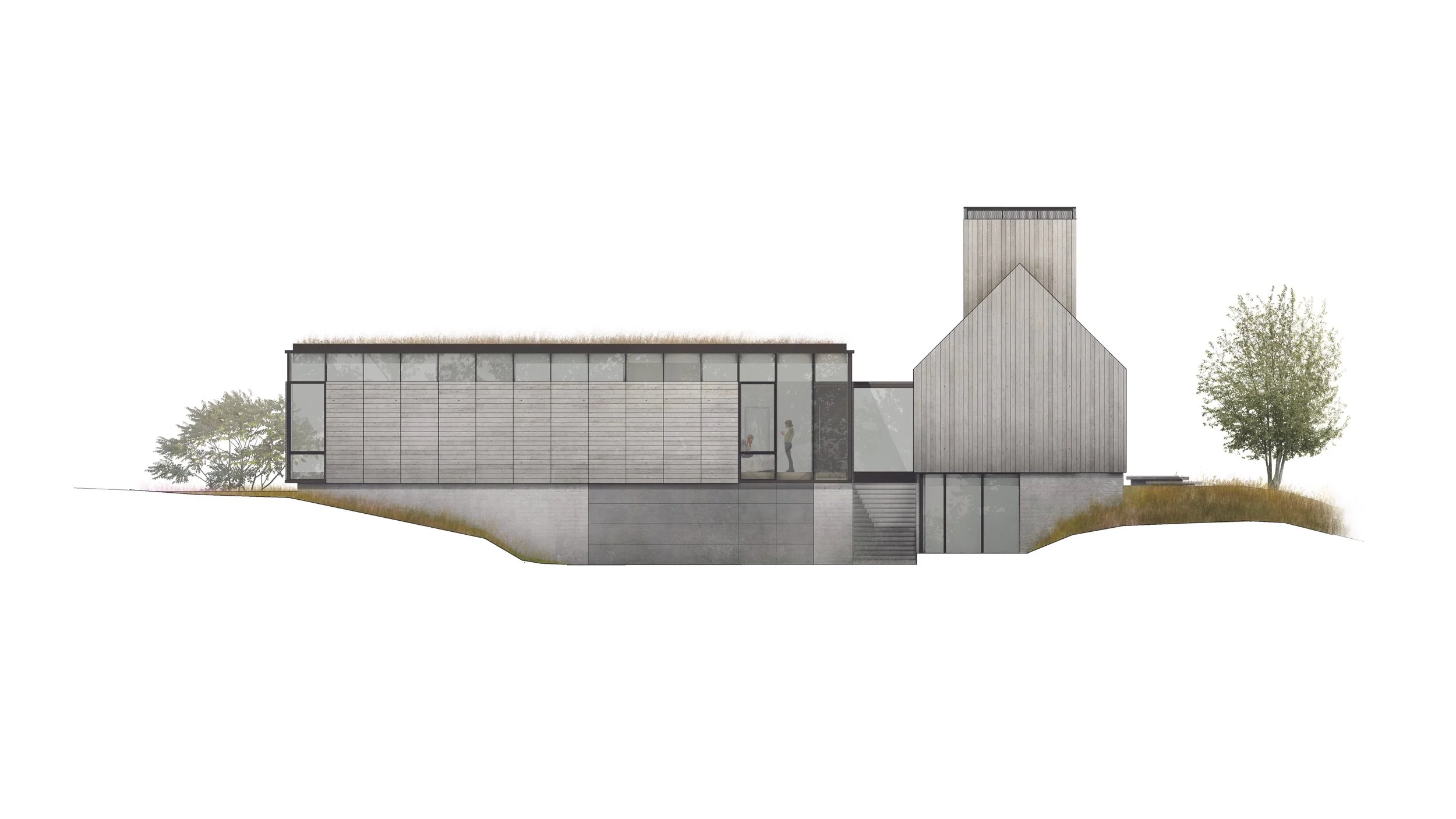
A flat-roofed addition is set perpendicular to the gabled form. Housing the private spaces and a gallery, it frames the other side of a courtyard at the top of the hill. While the Cape and outdoor room sit at the highest point of the land, entry to the site is via a driveway one floor below. To bridge the high and low site conditions, the addition pulls back and a gossamer-like glass connector links the two volumes. This passageway spans a stair that leads from the entry level below to the higher courtyard above. Pushing the addition into the ground, a garage is located at the lower level, and an internal stair draws one up to the glass bridge atop the hill.
Landscape Architect: David Maynes Studio
Renderings by Elliott Architects